|
Single Ended Halogen Capsule - A1/215 FCR |

In 1961 the work of J.A. Moore at the Hirst Research Labss of GEC at Wembley was published, in which H.G. Jenkins presented the company's invention of the Single Ended Low Voltage halogen lamp. By pinching both tails of the filament into a single seal the contruction was simplified, and the introduction of a low voltage filament made the lamp remarkably compact. The world's first lamp made according to this design was the type A1/215 (FCR) shown here. It is a 12V 100W capsule having a flat mandrel filament, intended for slide projection applications. The GEC promoted this new innovation to the UK projector manufacturers such as Aldis, but astonishingly they showed little interest. The company therefore focussed on the retrofits market supplying adaptors such as the type illustrated here, which allowed them to replace various incandescent types such as the A1/186 and its pre-focussed version, the A1/193.
Curiously the European manufacturers showed much more interest in halogen lamps, and here Thorn Lighting had stronger contacts. It ably exploited the GEC's single ended concept and was first with a halogen lamp for 8mm cine projection, produced for Eumig. GEC meanwhile went on to achieve a position of leadership in other markets, such as the use of these capsules in airfield and automotive lighting.


| Manufacturer: | The General Electric Company of England, PLC | |
| Lamp Power: | 100 Watts | |
| Lamp Voltage: | 12 Volts | |
| Lamp Current: | 8.33 Amperes | |
| Cap Type: | GY6.35 | Molybdenum pins |
| Bulb Type: | T-10.5 | T-3.5in eighths/inch |
| Bulb Finish: | Clear | Quartz |
| Filament Type: | FC-6 | 3.5 x 2.5mm |
| Atmosphere: | Iodine in Ar | |
| Luminous Flux: | 3000 lm | |
| Luminous Efficacy: | 30.0 lm/W | |
| Peak Intensity: | N/A | |
| Beam Distribution: | N/A | |
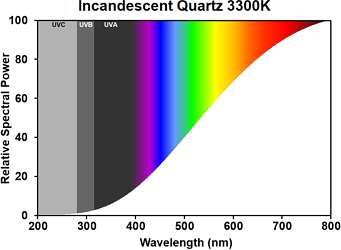
| Colour Temperature & CRI: | CCT: 3300K | CRI: Ra 100 |
| Chromaticity Co-ordinates: | CCx: 0.452 | CCy: 0.409 |
| Rated Lifetime: | 50 hours | to 50% survival |
| Burning Position: | Universal | |
| Max. Overall Length: | 44 mm | 1 3/4" |
| Light Centre Length: | 30 mm | 1 3/16" |
| Factory: | Wembley | United Kingdom |
| Date of Manufacture: | July 1966 | Date Code XG |
| Original / Present Value: | Unknown | |