|
 |
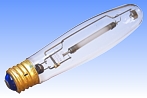
GE |
500W |
| Early Prototype of First Lucalox Lamp |
| ~1965 |
|
|
 |
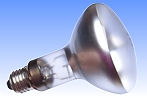
GE |
400W |
| LU400/BD with external amalgam reservoir |
| 1971 |
|
|
 |
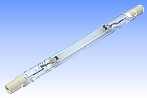
GE |
1000W |
| LU1000/BD with auxiliary electrode |
| ~1971 |
|
|
 |
GE |
250W |
| LU250 Universal with butterfly crimp reservoir |
| 1983 |
|
|
 |
GE |
125W? |
| LU125/BD low power experimental lamp |
| ~1970 |
|
|
 |
GE |
70W |
| First 70W-LV lamp, with Molybdenum heat pipe |
| 1976 |
|
|
 |
GE |
50W |
| LU50 Early low wattage with niobium wire seals |
| 1980 |
|
|
 |
GE |
70W |
| LU70/90/T10/27 Compact Tubular |
| 1992 |
|
|
 |
GE |
1000W |
| LU1000 with voltage fuse in outer jacket |
| 1980 |
|
|
 |
GE Mexico |
150W |
| LU150 55-Volt of Mexican Design |
| ~1985 |
|
|
 |
Tesla |
400W |
| Early Czech lamp with metal end seals |
| 1967 |
|
|
 |
Atlas |
250W |
| Early British KolorSON with metal end seals |
| 1969 |
|
|
 |
Philips |
400W |
| SON-T 400W with monolithic ceramic seals |
| 1971 |
|
|
 |
Westinghouse |
150W |
| C150S56 Canadian lamp with niobium cup seals |
| 1974 |
|
|
 |
Tungsram |
400W |
| TC 400 with unusual large end seals |
| c. 1975 |
|
|
 |
Thorn |
70W |
| First 70W-HV lamp, with wide bore arc tube |
| 1976 |
|
|
 |
Thorn |
70W |
| Early low wattage lamp with large bore arc tube |
| 1983 |
|
|
 |
Thorn |
50W |
| Early low wattage lamp with large bore arc tube |
| 1987 |
|
|
 |
Polamp |
400W |
| WLS 400 with early Niobium cup seals |
| 1978 |
|
|
 |
Philips |
250W |
| SON-T with scraped-tip electrode assembly |
| 1980 |
|
|
 |
Norleco |
250W |
| SON-T of Philips American design |
| 1980 |
|
|
 |
Sylvania |
200W |
| Lumalux LU200 of unusual power rating |
| 1982 |
|
|
 |
Thorn |
400W |
| SON-T with prototype Cermet arc tube seal |
| 1983 |
|
|
 |
Tungsram |
250W |
| TC 250W with double niobium wire seals |
| 1985 |
|
|
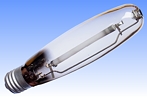 |
PZGRL |
400W |
| DNaT 400-4 of early Ukranian design |
| 1985 |
|
|
 |
Tesla |
70W |
| SHC with Monolithic 2-Piece PCA design |
| 1987 |
|
|
 |
Thorn |
1000W |
| SON-T 1000W with narrow bore Nb seals |
| 1988 |
|
|
 |
Thorn |
70W |
| SON-T with cermet arc tube seals |
| c. 1991 |
|
|
 |
Osram |
70W |
| SON-Plus with side arm to measure vacuum |
| 1991 |
|
|
|
|